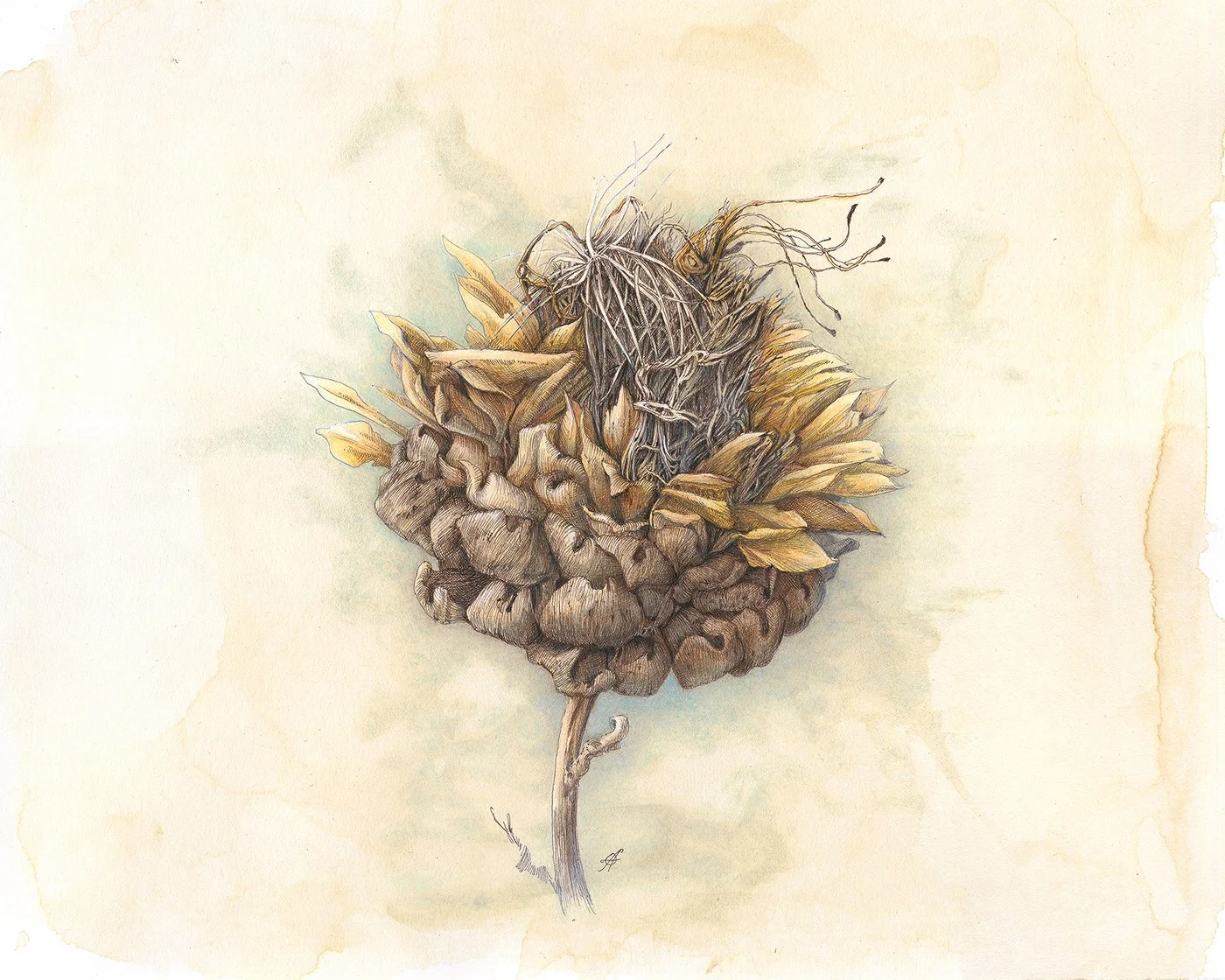
Faber-Castell Polychromos pencil, ink and pastels, on stained 12” x 12” watercolor paper.
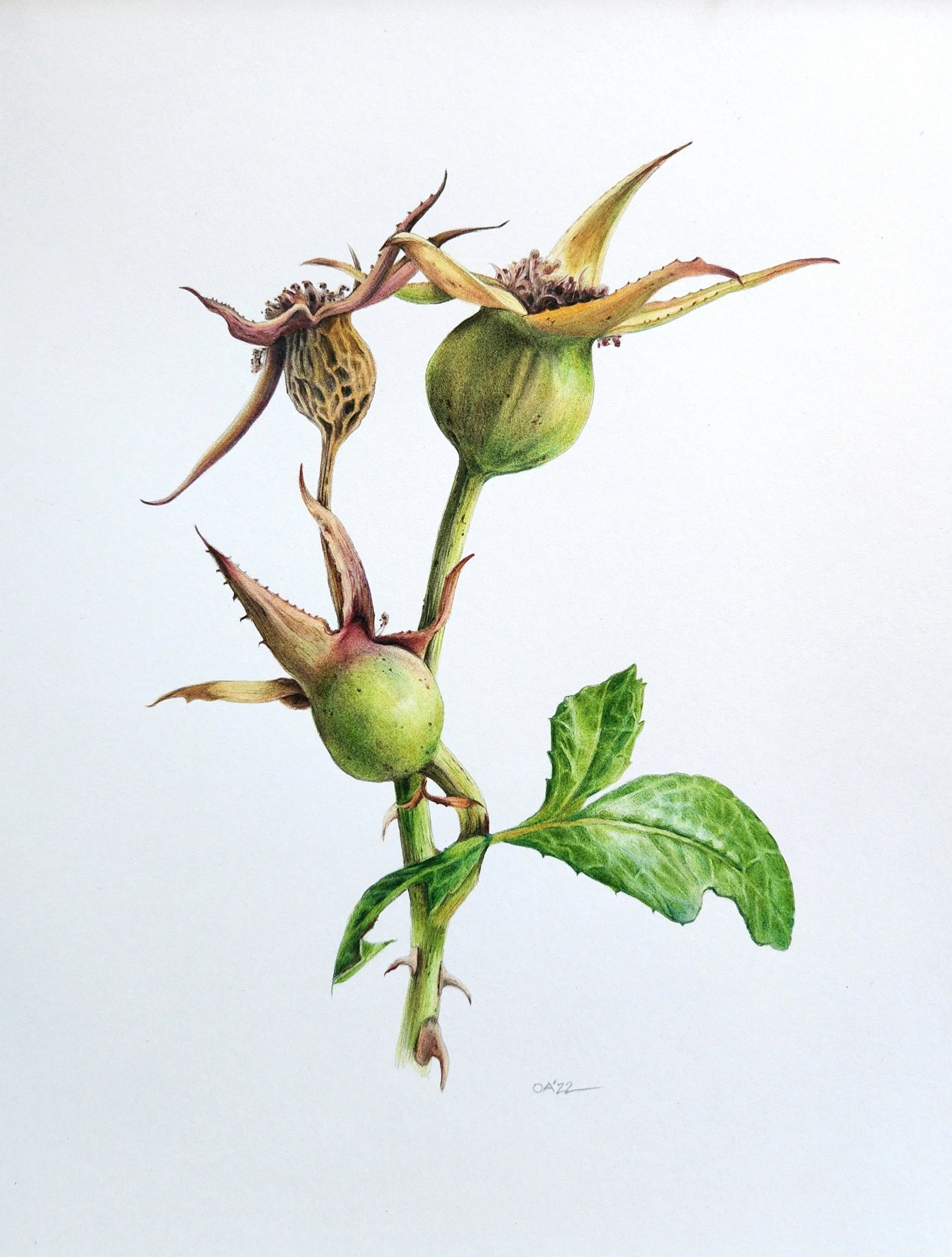
These are rose hips from a Just Joey Rose in my garden. Normally, it’s important to prune them off in order to encourage prolific blooming. But I leave some of these hips on my rose plants because they provide food for some of the surrounding wild life.
Rose Hips, 9”x12” Bristol paper, Faber-Castell Polychromos pencils.
A graphite and pencil study of Buddha’s Hand (Citrus medica var. sarcodactylis), the Asian citron fruit. 22” x 30” paper.
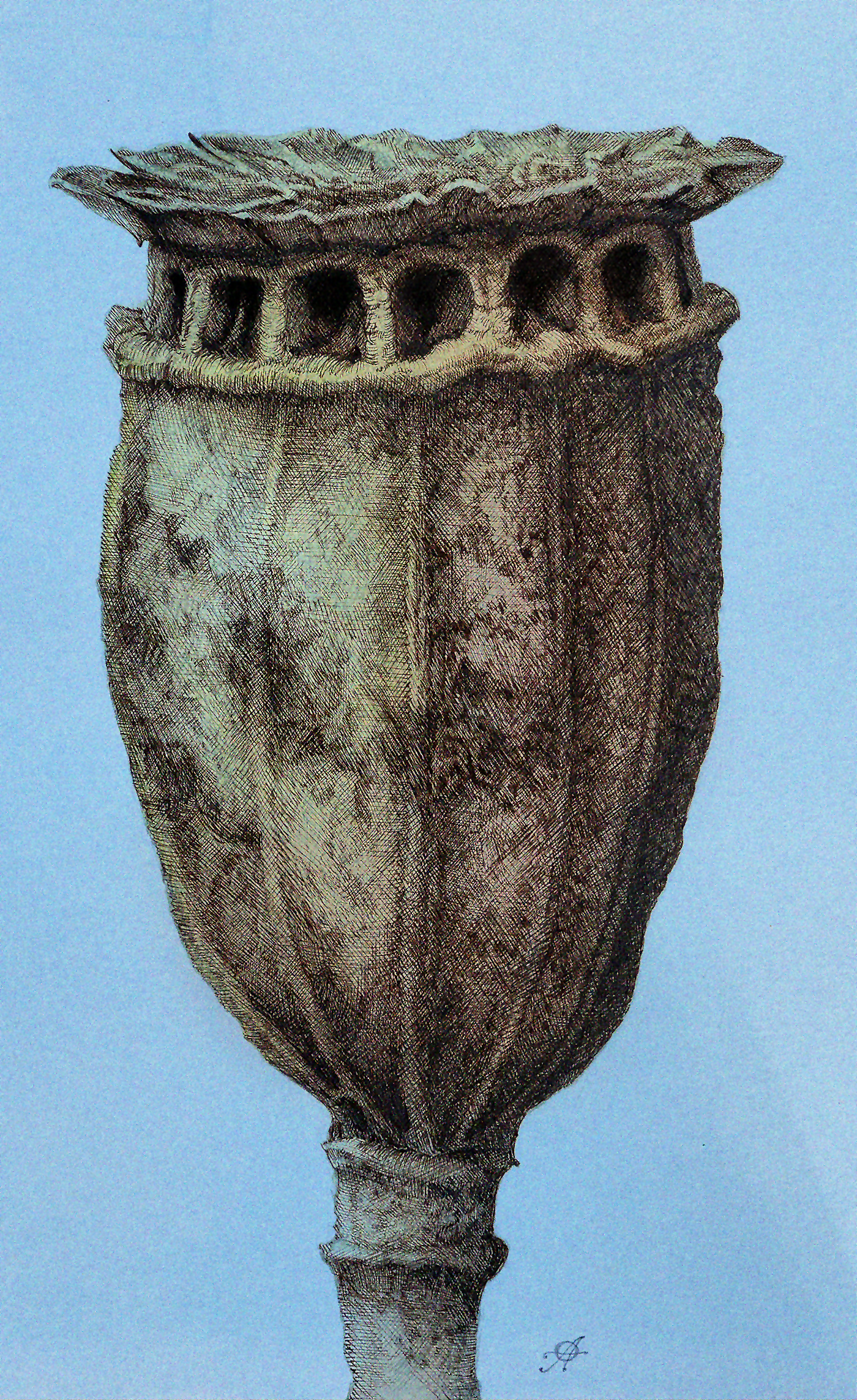
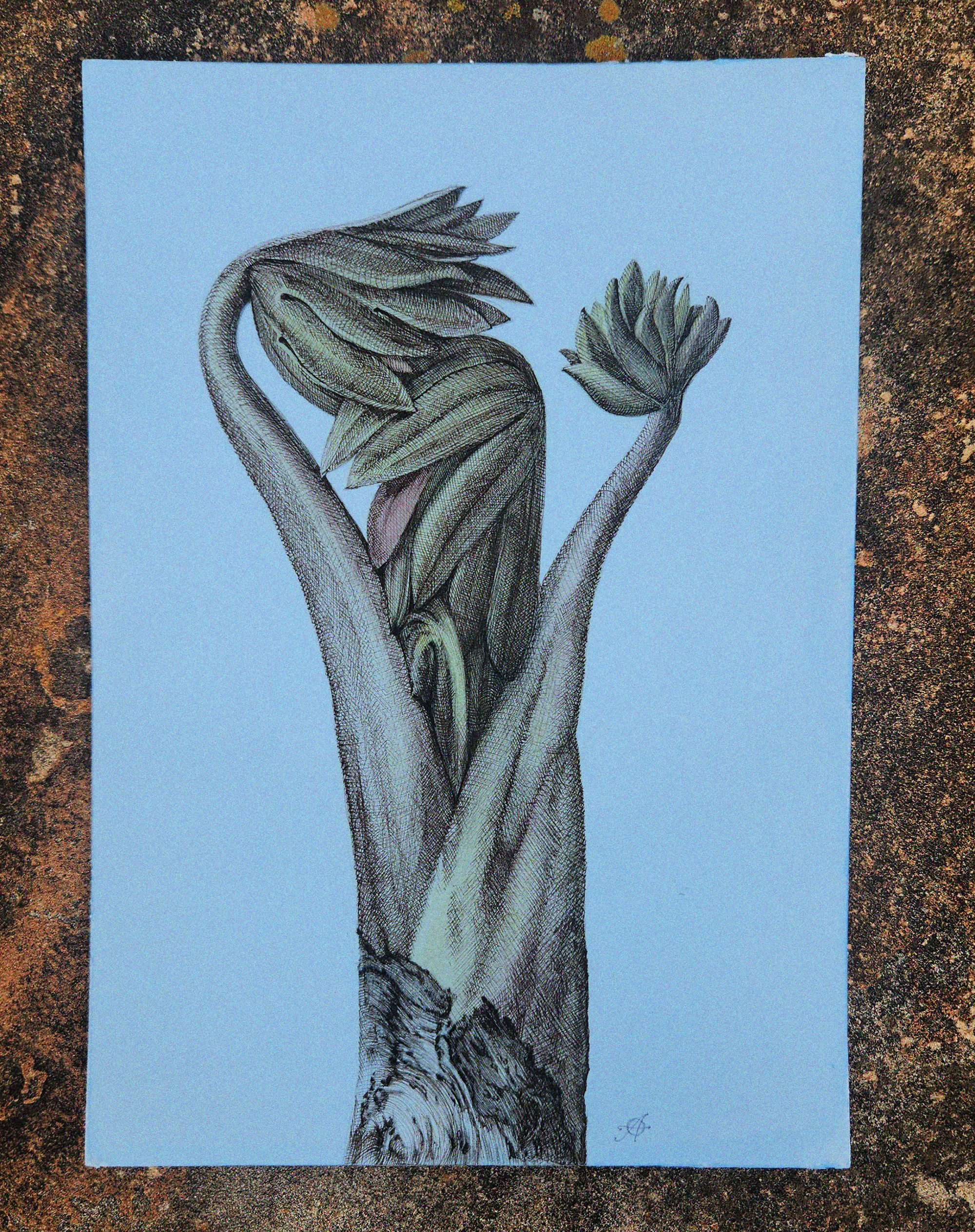
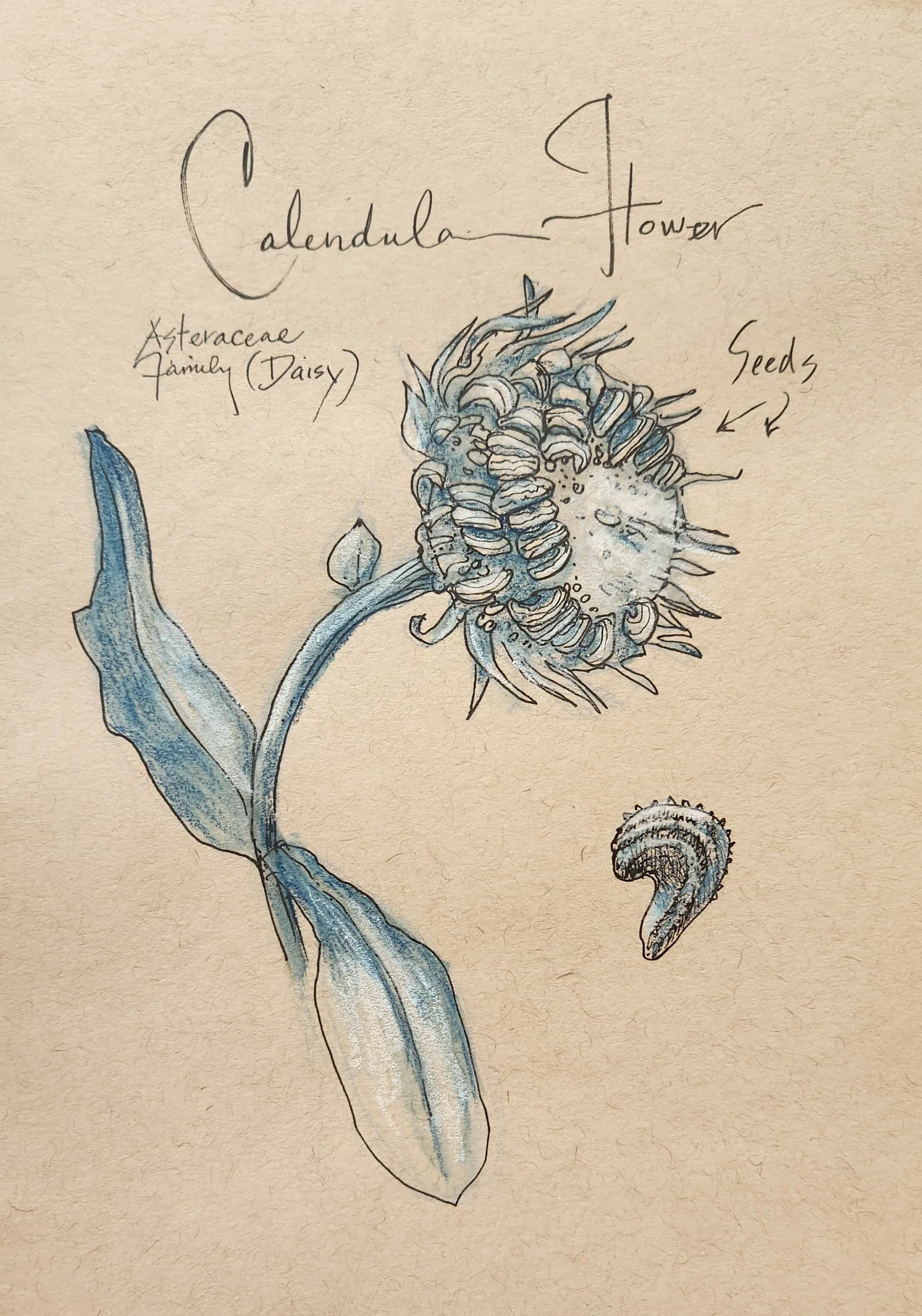
From my studies of Karl Blossfeldt’s precise, highly magnified photographs of plants. Ink and Derwent water-soluble tinted graphite on 7” × 10” cotton watercolor paper.
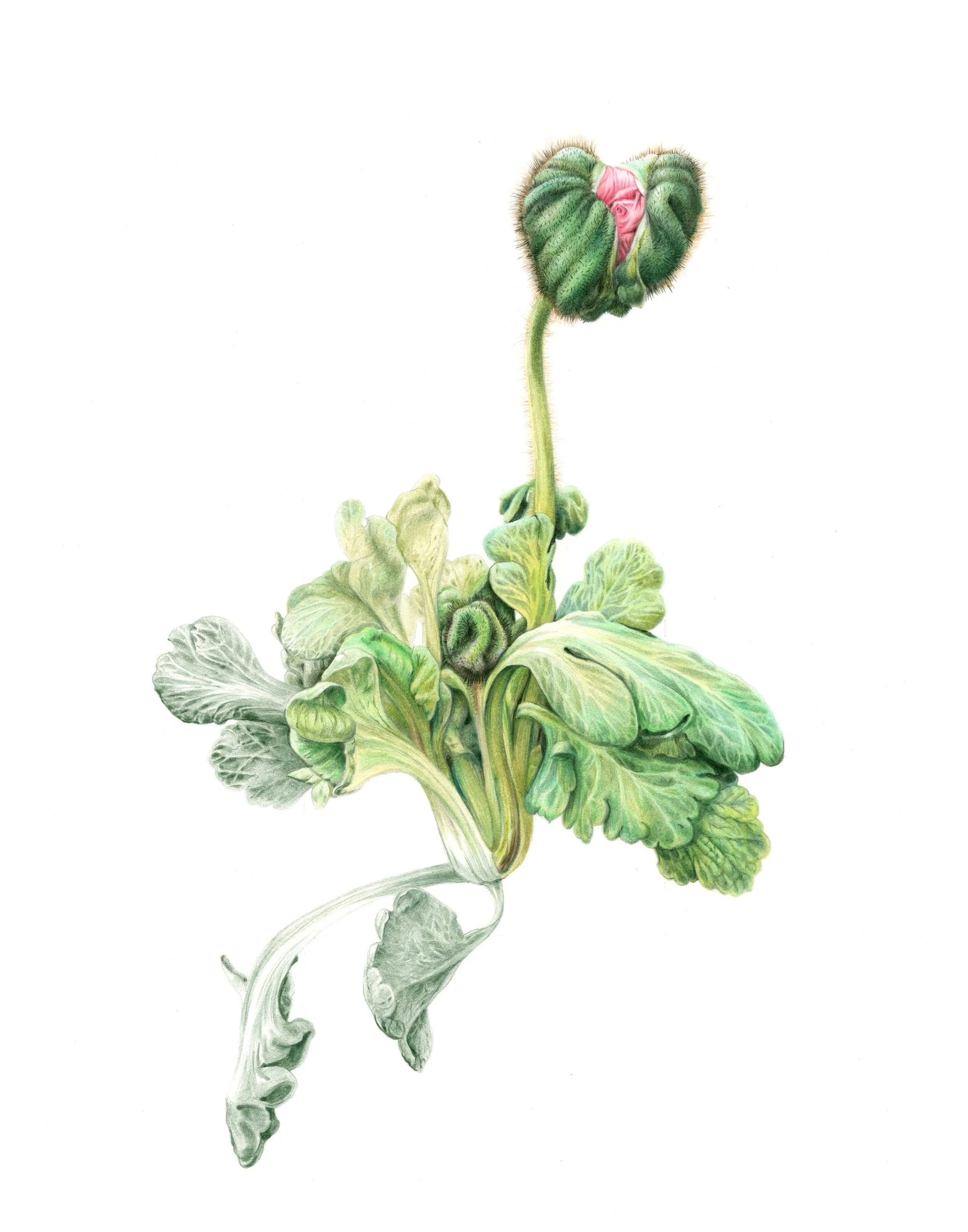
Poppy buds are dramatic because many of them start off looking like hairy, awkward little monsters. But as they bloom, they develop into breathtaking, crisply petaled, colorful flowers. I love both stages, but I’m quite fond of the awkward one.
Poppy bud. 9”x12” Bristol paper, Faber-Castell Polychromos pencils, watercolor, gouache.
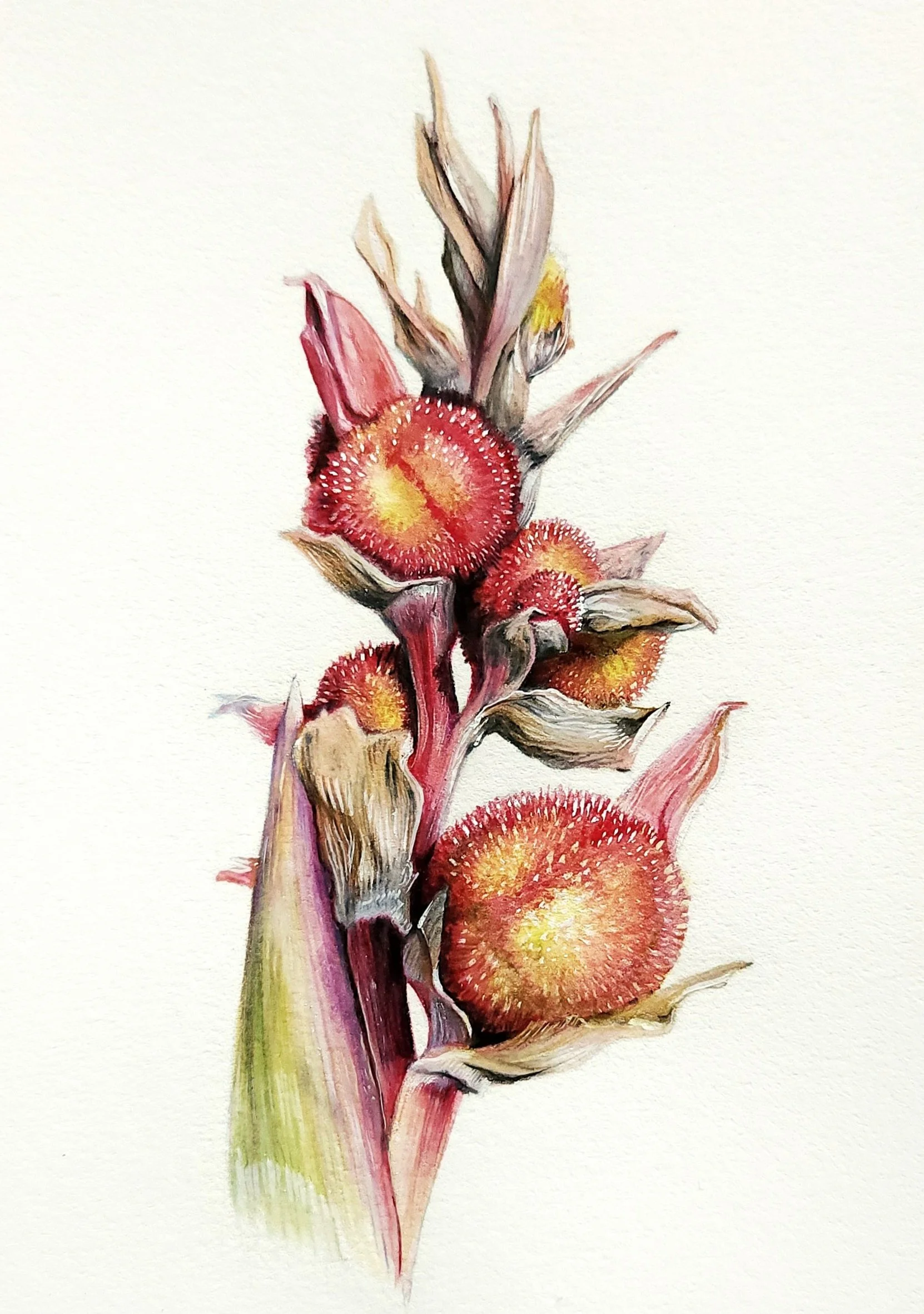
5” x 7” Stonehenge cotton paper, watercolor, Faber Castell Polychromos pencils, Prismacolor, Gouache.
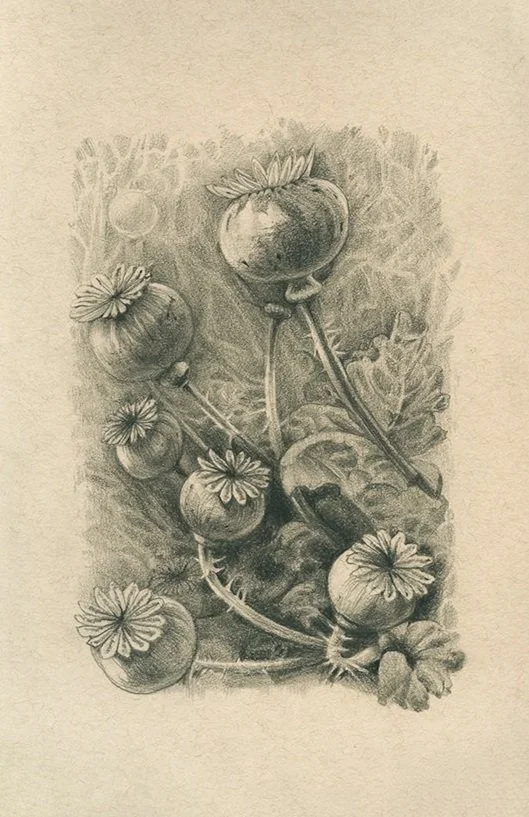
Poppies in a field. 6×9. Mars Lumograph pencils.
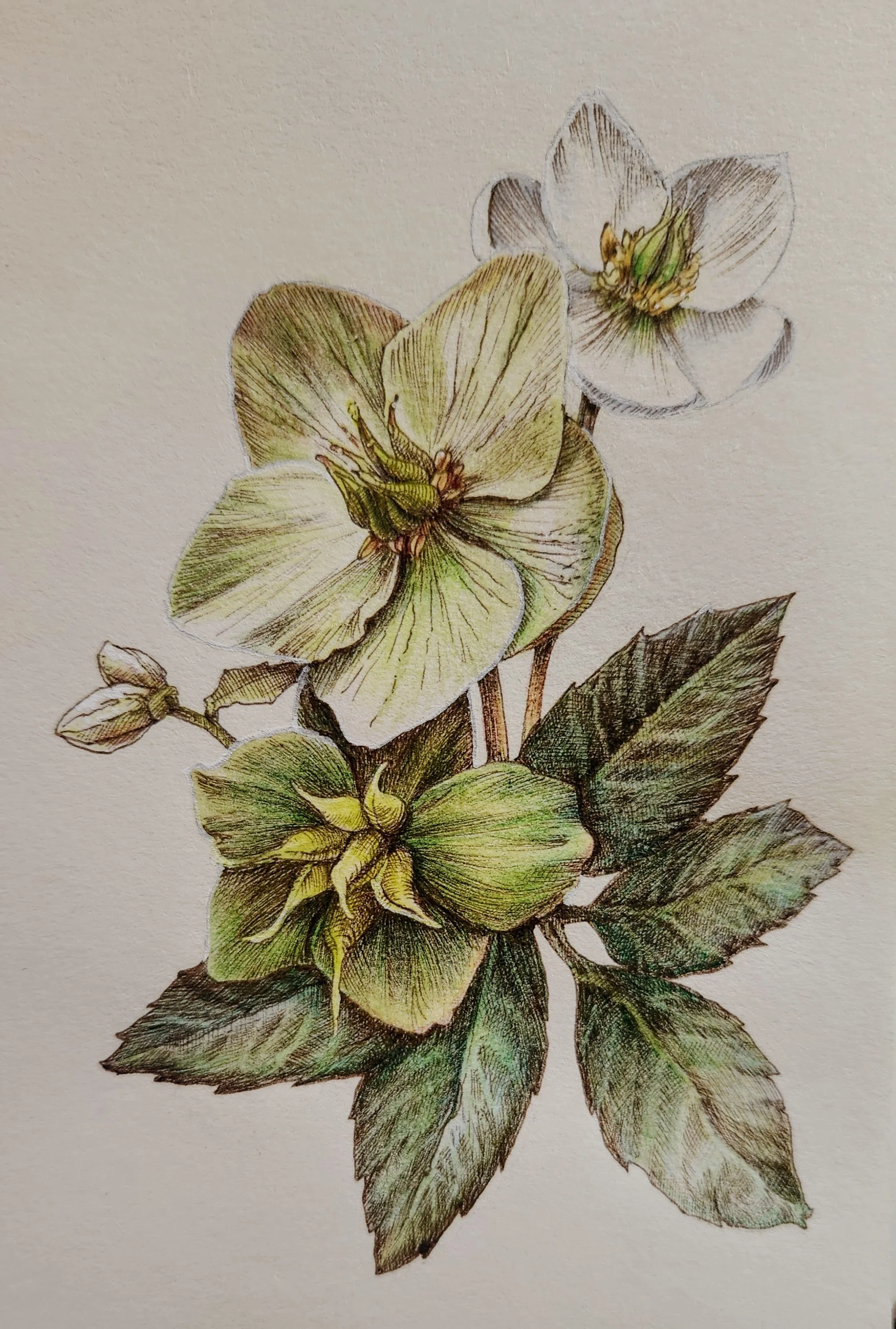
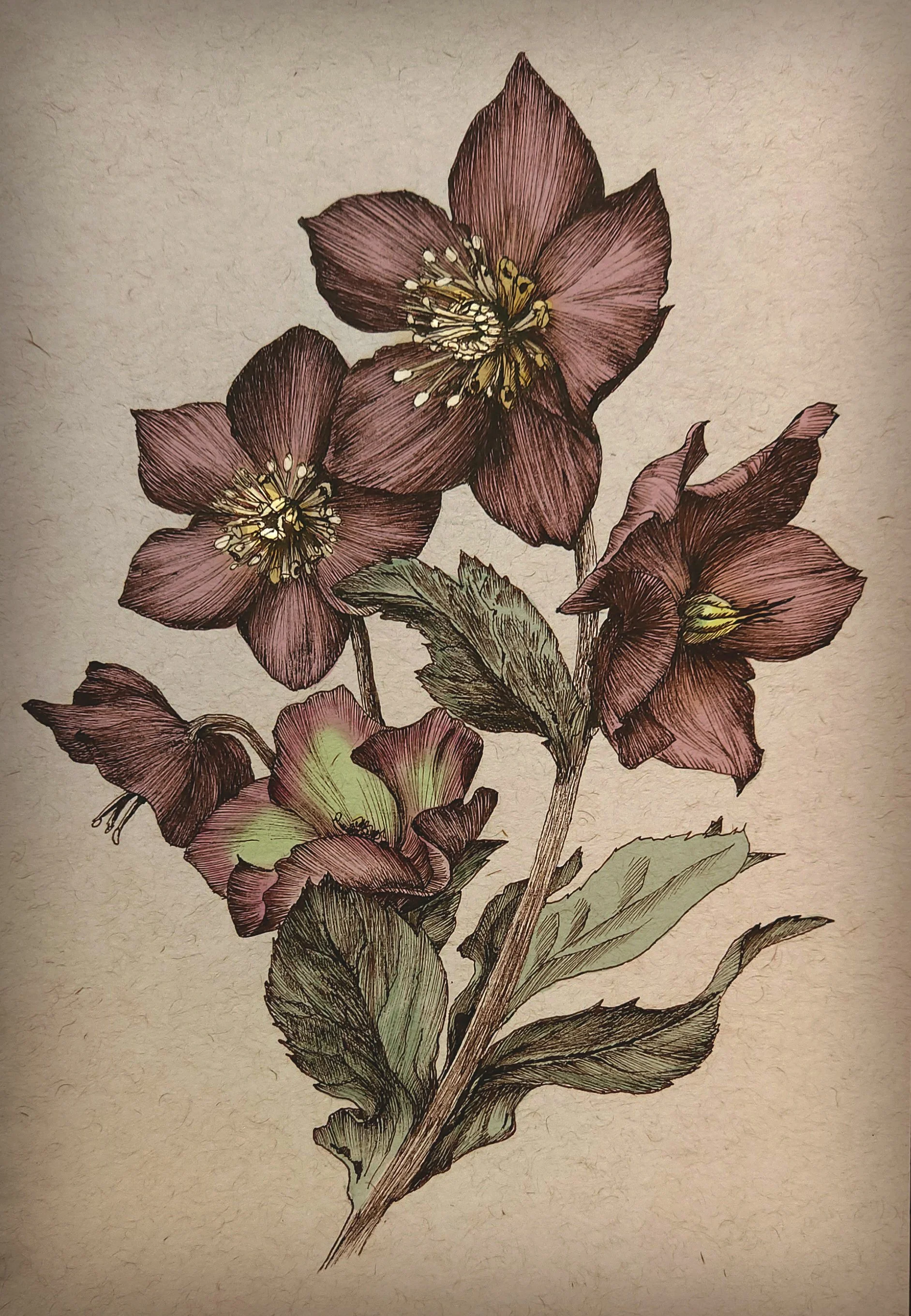
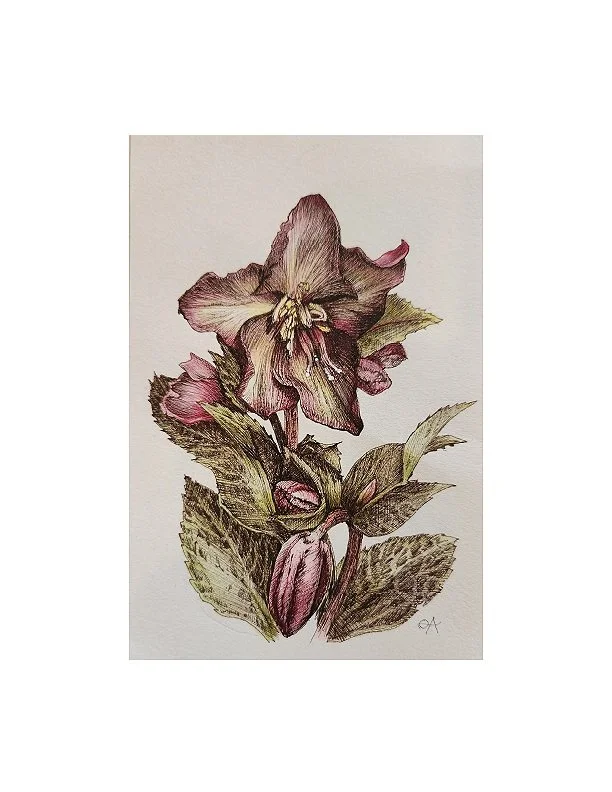
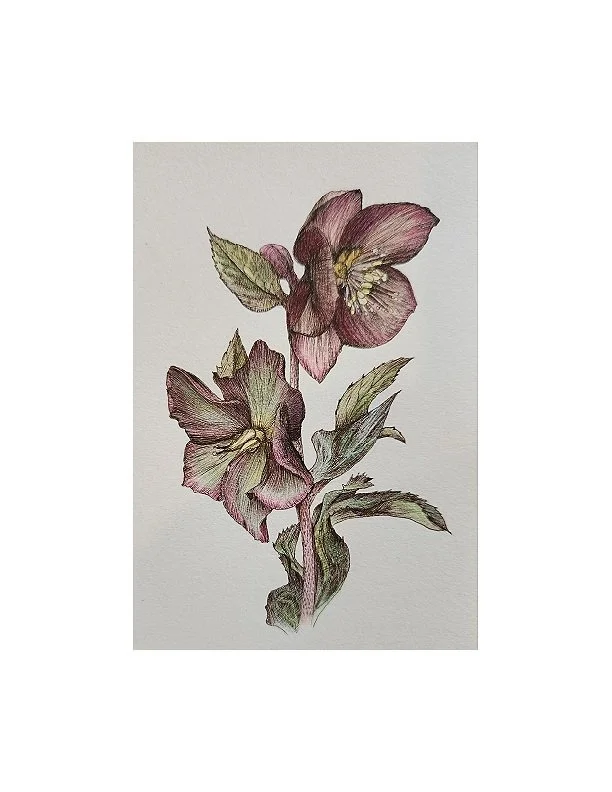
Helleborus are known in recent history as the Christmas and Lenten rose. I like to portray them as slightly sinister in my art, however, because of their storied past. The flower was used for medicinal purposes. But if improperly administered, it could exacerbate a patient’s condition and lead to insanity, even death. (Makes them a creepy sort of beauty when you realize such things.)
Helleborus sketches. Craft and Bristol paper. Ink, Faber-Castell Polychromos color pencils, watercolor, gouache
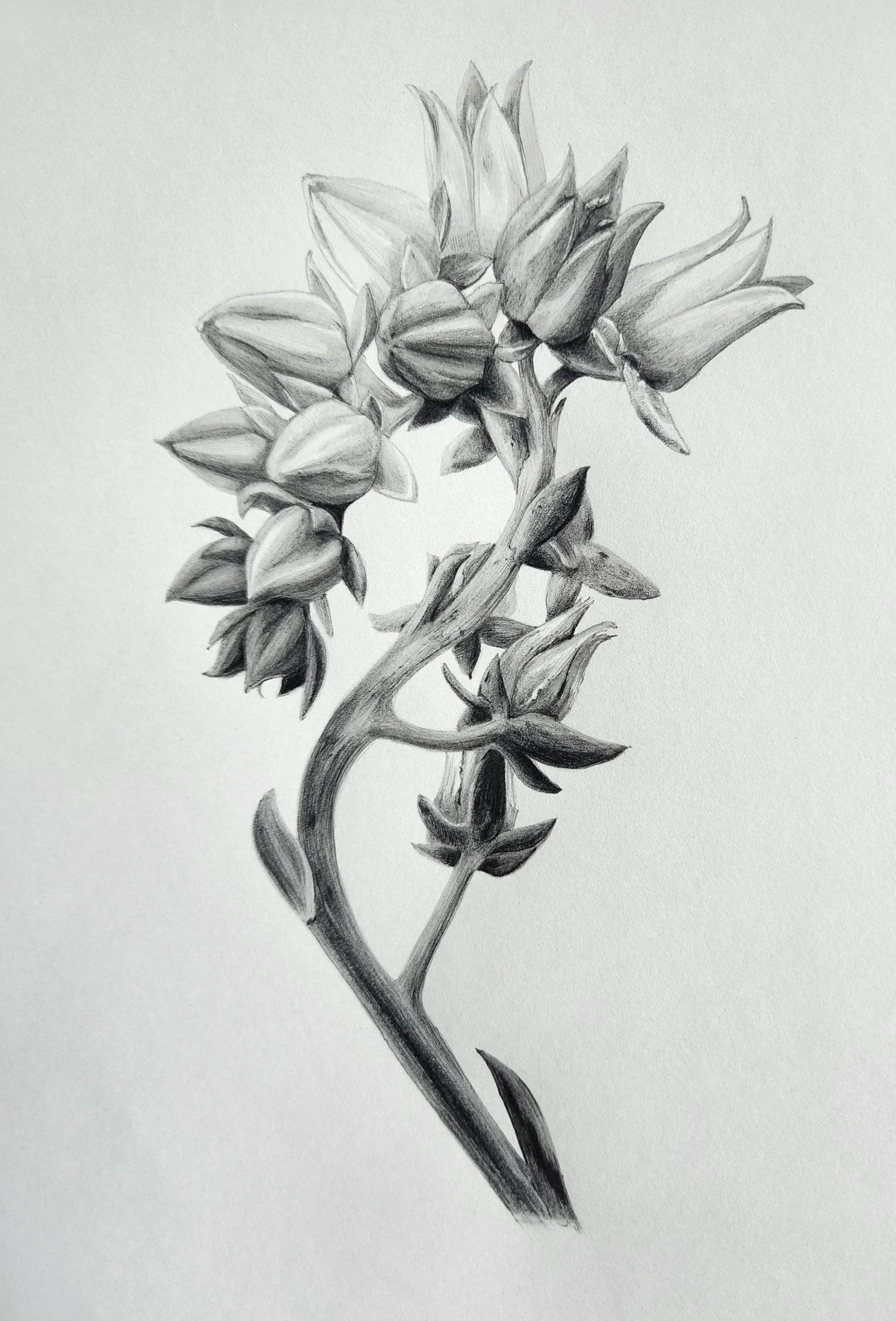
echeveria stem. 9 x 12 Bristol paper. Graphite pencil.
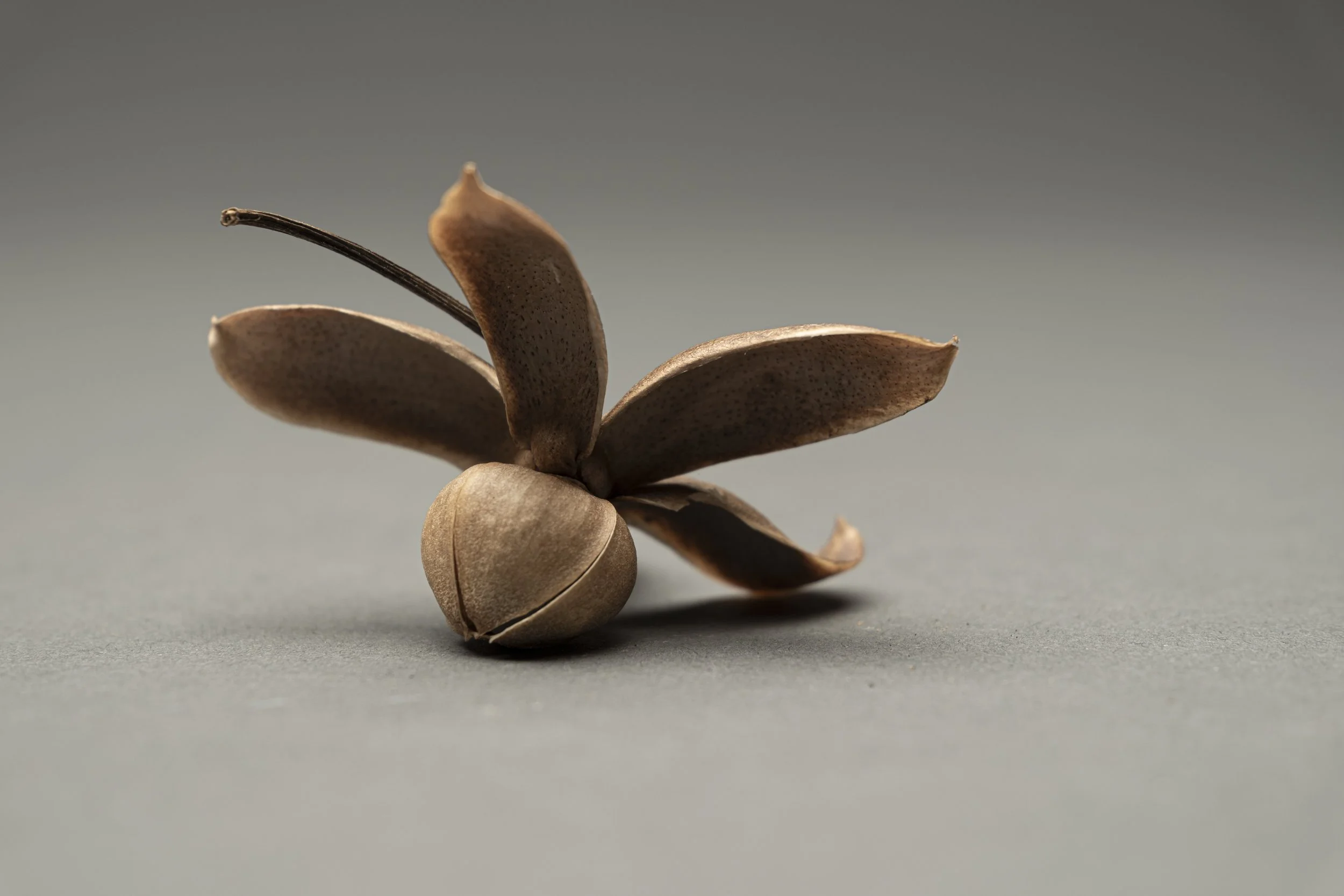
Seed study: Texas Alamo Vine
“Death brings life. Life brings death.” (Marieke Nijkamp)
5”x7” Faber-Castell Polychromos colored pencil